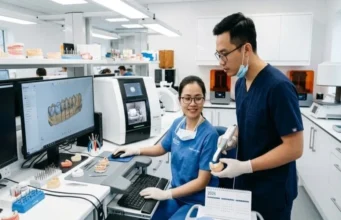
The healthcare industry has long grappled with an insidious problem: the overwhelming administrative burden placed upon clinicians. Physicians, nurses, and specialists often find themselves spending nearly half of their workday on charting, note-taking, and data entry, rather than focusing on direct patient care. This exhaustive requirement for detailed documentation has been identified as a leading driver of burnout, a crisis that threatens the stability and quality of the global healthcare system. Fortunately, a powerful digital solution is emerging to combat this issue head-on: the AI medical scribe.
This sophisticated technology, often classified as medical transcription software, represents a paradigm shift in how clinical encounters are documented. Instead of relying on manual note-taking—either by the physician themselves or a human scribe—the AI medical scribe utilizes advanced computational models to listen to or receive dictated patient consultations. The core promise is simple: turn real-time conversations into accurate, compliant medical notes instantly, allowing the doctor to remain fully present with the patient.
The Technology Behind the Transformation
The underlying power of AI medical transcription lies in specialized Large Language Models (LLMs) and Natural Language Processing (NLP), trained extensively on vast datasets of medical terminology, clinical workflows, and regulatory requirements. When a consultation begins, the software captures the dialogue, often via a secure app or recording device. The AI then instantly processes this unstructured conversation and converts it into structured clinical data. The process typically follows a straightforward three-step model: Record, Document, and Save Time.
First, the recording captures everything said during the interaction, whether it’s a full conversation with the patient or a summary dictated by the physician afterward. Next, the system uses its advanced algorithms to generate a comprehensive, detailed summary of the encounter. Critically, this summary is often provided in standardized formats, such as a SOAP note (Subjective, Objective, Assessment, Plan), making it immediately usable and easy to integrate with a clinic’s existing Electronic Medical Records (EMRs). The documentation is not just a direct transcript; it is an intelligent output, accurately organizing symptoms, diagnoses, treatments, and follow-up plans.
Quantifiable Gains in Efficiency and Precision
The benefits of adopting this type of medical scribe AI are not abstract; they are quantifiable and profoundly impact a practice’s efficiency. Initial adopters have reported dramatic reductions in charting time, with some physicians saving an average of two to three hours daily—time that can be redirected toward patient engagement, seeing more patients, or achieving a healthier work-life balance.
This efficiency boost goes hand-in-hand with enhanced precision. Human transcription and manual data entry are inherently susceptible to error, misinterpretation, or omission due to distraction or fatigue. An advanced AI medical scribing system, however, maintains consistent data accuracy across all notes. By meticulously capturing and structuring every detail of the patient interaction, the technology helps reduce clerical mistakes and ensures that records are detailed and compliant with relevant healthcare regulations, such as HIPAA, prioritizing the confidentiality and integrity of medical data through robust encryption and de-identification measures. Customization is also a key feature; the ability to adapt templates and workflows to suit a specific specialty or practice ensures that the documentation is tailored and meets precise needs.
Refocusing on the Patient Experience
Perhaps the most significant, though less obvious, benefit of the ai medical scribe is its impact on the patient experience. The presence of a computer, a tablet, or even a human scribe can sometimes create a barrier, distracting the physician and disrupting the crucial flow of communication needed to build trust and rapport. When a doctor is liberated from the need to constantly look down and type or take notes, they can maintain eye contact, listen more actively, and focus their full attention on the person in front of them.
For professionals in fields requiring deep patient rapport, such as mental health, or those requiring focused attention, such as pediatrics and cardiology, this renewed focus is invaluable. It ensures that the consultation is centered entirely on the patient’s needs and narrative, fostering a more meaningful connection.
In conclusion, the movement toward AI medical scribing is far more than a technological upgrade; it is a vital step toward restoring balance in healthcare. By automating the arduous process of documentation, this class of ai medical transcription tools empowers clinicians to reclaim their time, reduce burnout, enhance the accuracy of their records, and ultimately, elevate the quality of care they provide. It represents a necessary and timely evolution for the modern medical practice.