The healthcare sector has always operated under a fundamental obligation: every tool that touches a patient must be free from microbial contamination. As disposable medical supplies have become standard across hospitals, clinics, and diagnostic centres, the question of how to sterilise them reliably has grown increasingly critical. Among the various methods available today, medical irradiation stands apart as the most trusted, efficient, and widely adopted solution for high-volume sterile product manufacturing.
What Sets Radiation-Based Sterilisation Apart
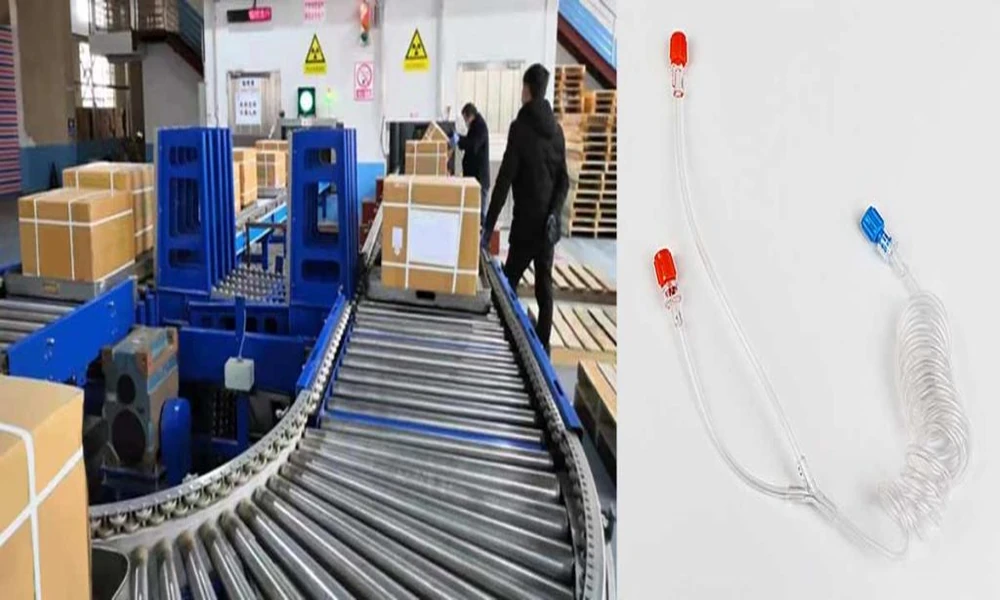
Traditional sterilisation approaches, including steam autoclaving and chemical treatments, have served the industry for decades. However, they come with limitations that become evident when dealing with heat-sensitive or moisture-sensitive materials. Radiation-based sterilisation overcomes these constraints by working at ambient temperature without leaving behind chemical residues. This makes it particularly well-suited for items like syringes, catheters, surgical drapes, gloves, and wound dressings that cannot tolerate high heat or reactive chemicals.
The process is straightforward in concept: ionising radiation damages the DNA of microorganisms, rendering them incapable of reproduction. The result is a sterile product with unaltered physical properties, making it safe to package, store, and ship globally.
How Irradiation Technology Delivers Consistent Results
One of the strongest arguments for adopting irradiation technology in disposable supply chains is its consistency. Unlike chemical methods, where penetration depth and exposure uniformity can vary, radiation penetrates packaging completely and uniformly. This ensures that every unit in a bulk shipment receives an equivalent sterilising dose, eliminating the risk of partially treated products reaching end users.
Modern facilities use real-time dosimetry systems to monitor and record radiation levels throughout each processing cycle. This level of traceability is not just a quality advantage; it is increasingly a regulatory requirement. Validation protocols align with international standards, giving manufacturers confidence that their products meet export-grade sterility benchmarks.
The Science Behind Sterilisation of Surgical Instruments
Surgical tools present unique sterilisation challenges. Their complex geometries, combination of materials, and absolute zero-tolerance for contamination demand a method that is both thorough and non-destructive. The sterilisation of surgical instruments using radiation addresses these demands comprehensively.
Key advantages include:
- Radiation penetrates multi-layer packaging, meaning instruments can be sterilised after final packaging, preserving sterility until the moment of use.
- The process does not introduce moisture or heat, so delicate components such as optical fibres, polymer handles, and electronic sensors remain structurally intact.
- Processing time per batch is significantly shorter compared to ethylene oxide, which requires extended aeration cycles before products can be released.
These characteristics make radiation an ideal match for single-use surgical kits, pre-assembled procedure trays, and instrument sets with mixed material compositions.
Regulatory Confidence and Supply Chain Benefits
Healthcare procurement teams and regulators alike place enormous value on auditable processes. Medical sterilisation through radiation scores high on this front. Each batch processed at a certified facility comes with full documentation, including dose mapping reports, dosimeter readings, and cycle logs. This documentation forms the backbone of a robust quality management system.
From a supply chain perspective, irradiated products offer an extended shelf life compared to those processed using alternative methods. Products do not require refrigeration or special atmospheric conditions post-sterilisation. This reduces logistics complexity and storage costs, which is particularly beneficial for large hospital networks and medical equipment distributors managing vast inventories.
Additional operational benefits include:
- No need for post-processing aeration or quarantine periods.
- Lower risk of product recall due to sterilisation failures.
- Compatibility with a wide range of polymer, metal, and composite materials.
Environmental and Safety Considerations
A common concern around radiation-based methods relates to safety and environmental impact. It is worth noting that gamma and electron beam sterilisation do not make products radioactive. The treated items are safe to handle immediately after processing. Furthermore, facilities operating these systems are subject to strict regulatory oversight, ensuring that worker safety and environmental protection remain non-negotiable priorities. Compared to ethylene oxide, which is a carcinogenic gas requiring careful handling and disposal, radiation-based methods present a considerably cleaner profile.
Where the Future Is Headed
The demand for sterile disposable medical supplies is rising in tandem with growth in surgical volumes, home healthcare adoption, and infection control awareness across healthcare systems. As the industry scales up, sterilisation infrastructure must scale with it.
The Road Ahead: Infrastructure That Supports a Growing Healthcare Ecosystem
The expansion of gamma irradiation plants in India reflects a broader recognition that domestic sterilisation capacity is a strategic healthcare asset. With a rapidly growing medical device manufacturing sector, having robust, validated radiation sterilisation infrastructure within the country reduces dependence on overseas processing and shortens turnaround times for manufacturers. The presence of gamma irradiation plants in India is therefore not merely an industrial convenience but a critical enabler for producing safe, export-quality medical products at scale. As investments in this infrastructure continue, the entire healthcare supply chain stands to benefit, from device manufacturers to the patients who ultimately depend on these products for their care.